Munchies is the opposite of a starter.
It’s an open-source reference B2C storefront we built to answer questions like:
- Can we build a B2C storefront without using Shopify?
- Can it load fast globally without skeletons?
- Can it be reusable without looking like a template?
- Can a marketing team manage it without learning Git?
Fear of Cache Miss (FOCM)
Munchies is designed around a global pandemic in storefronts at scale: fear of cache miss.
In such storefronts, performance depends on caching rendered HTML at the CDN level.
Cache misses mean slower responses, higher infrastructure costs, or, in the worst cases, downtime. They are therefore avoided at all costs.
At scale, A/B testing, personalization, and search are non-negotiable. The experience becomes user-specific and no longer safely cacheable at the CDN layer.
The workaround is to serve skeletons from the CDN and hydrate real content afterward, introducing layout shifts and a false sense of speed.
Global performance
Munchies renders full pages under 300ms regardless of user location or how dynamic the route is.
This is achieved by bringing both rendering and data close to the user.
Pages are server-side rendered on Cloudflare Workers, distributed globally.
Catalog data is served from the edge — through a dedicated search worker and Sanity’s CDN.
Rendered HTML can still be cached when appropriate, but performance does not depend on cache hits.
Munchies PLP - TTFB (ms) in 100 requests
Interface concept
The challenge was to give Munchies a strong identity while keeping it themeable.
The structure stays neutral. Layouts follow familiar e-commerce conventions. Components don’t reinvent patterns.
Brand expression lives in controlled layers: color roles, typography, and imagery.
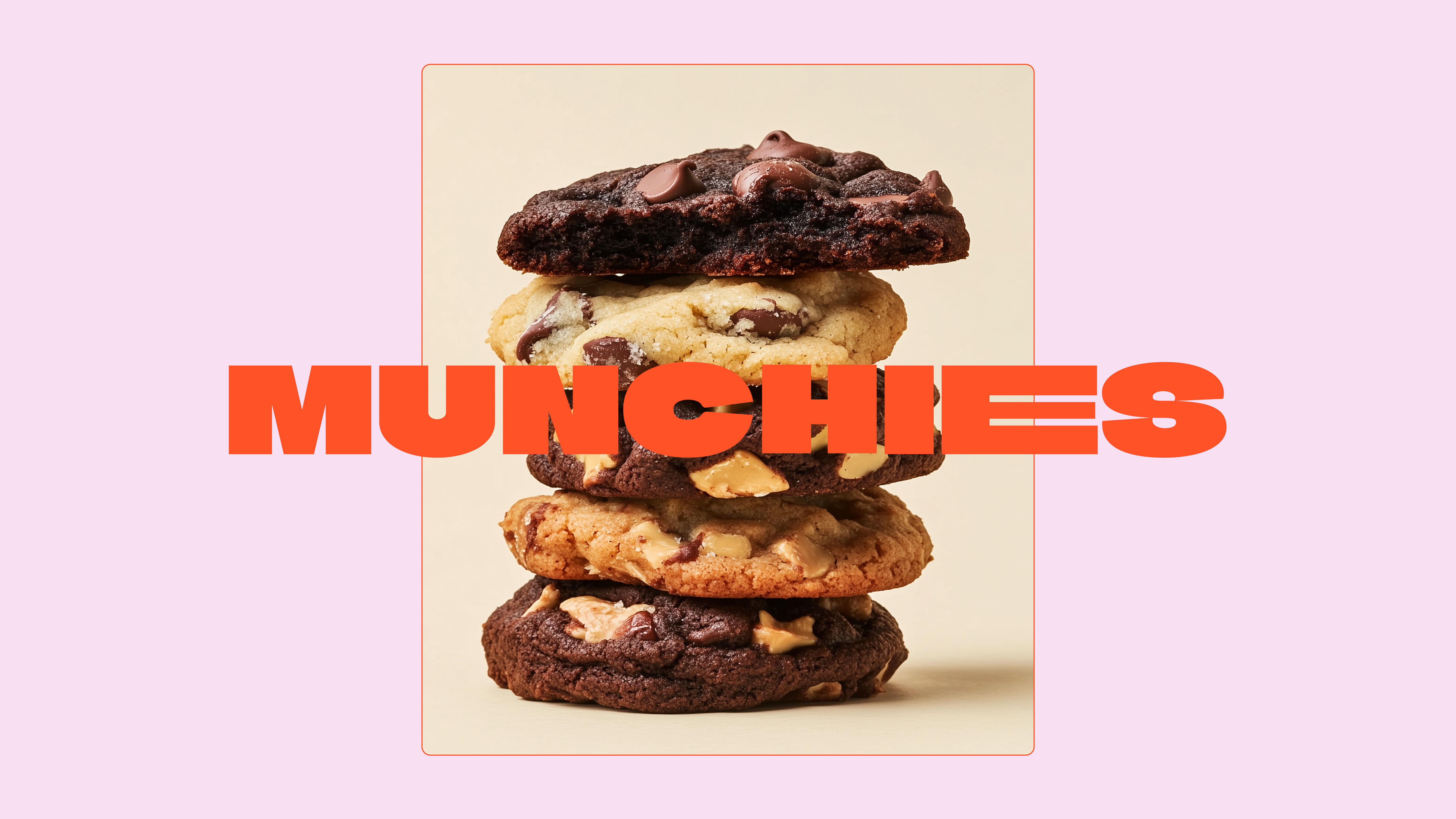
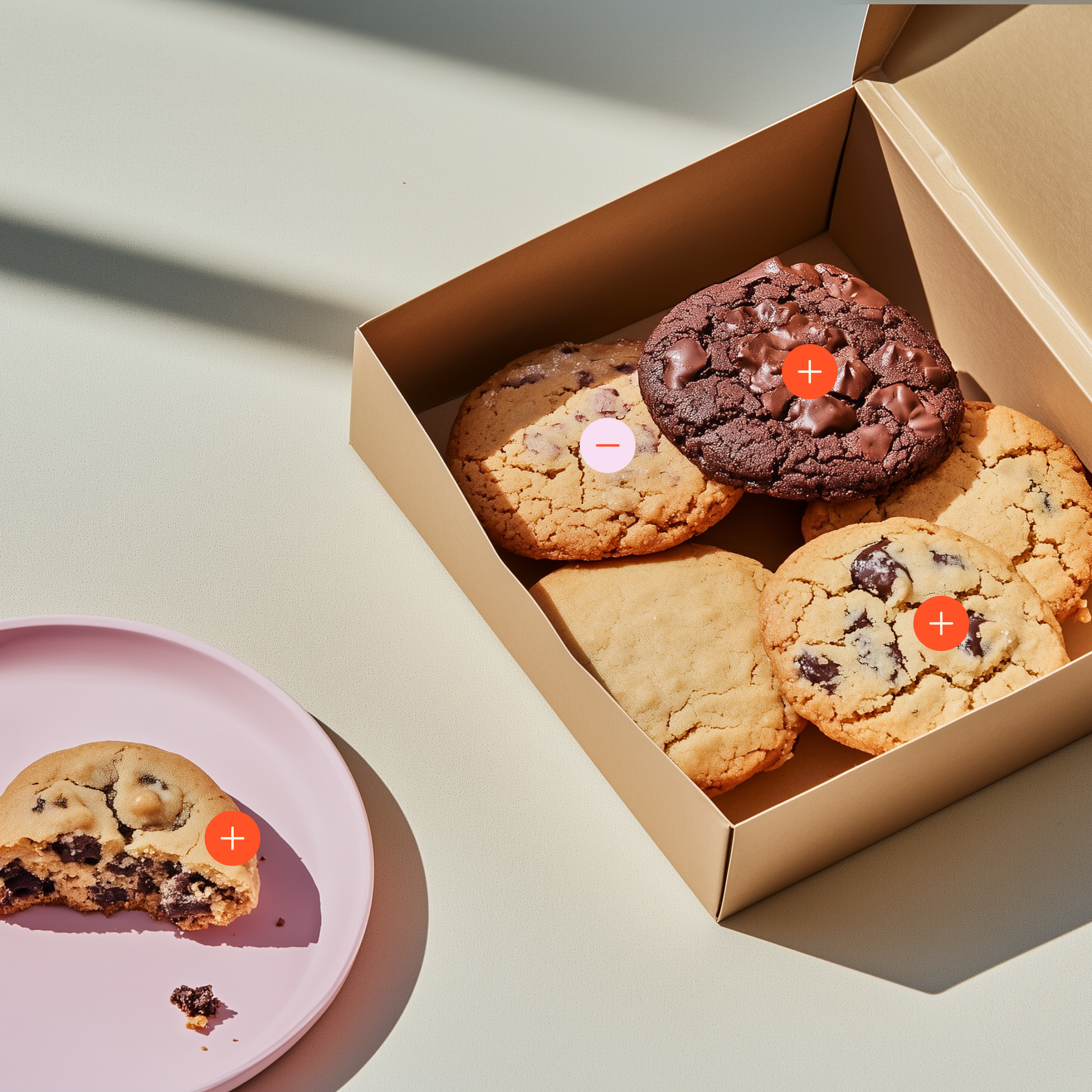
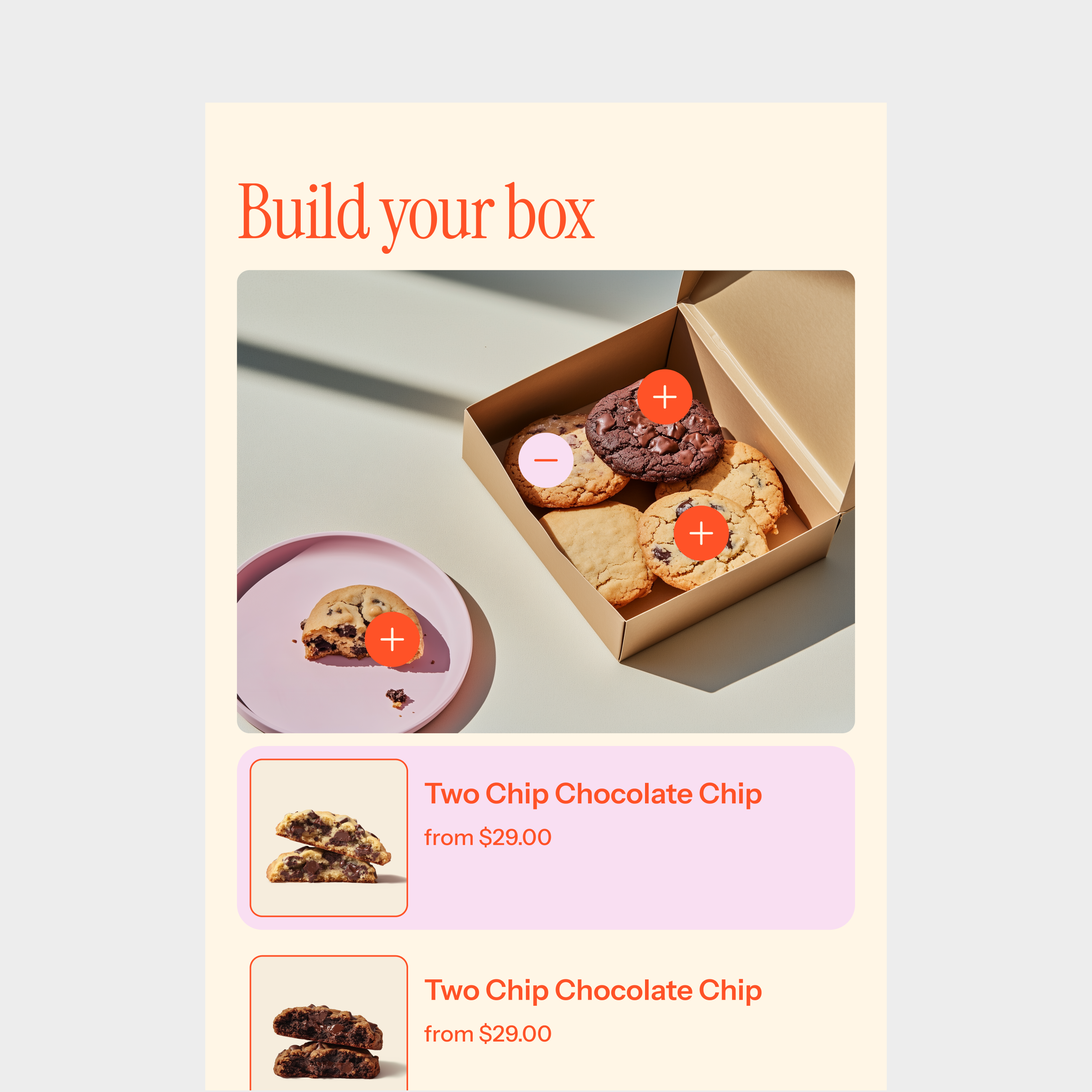
For Munchies, that meant leaning into a bold cookie identity. Product visuals were generated with Midjourney and then normalized — consistent backgrounds, framing, and positioning — so category pages feel cohesive and intentionally designed.
The personality comes from the brand layer, not from custom UI patterns.
Theming
Munchies is themeable by design.
All core visual tokens — colors, spacing, radii, typography — are defined as CSS variables. Components consume tokens instead of hardcoding brand decisions.
The result: the storefront can be radically transformed by changing variables and content alone.
Use the tabs to swtich between themes
Website management
Munchies can be managed by a marketing team without touching Git.
Content is managed from the CMS where a sitemap-like navigation makes it possible to visually navigate and create pages.
SEO is built into the workflow. Metadata fields follow search best practices, and the sitemap updates automatically as content changes.
Catalog data is synced in real time from Medusa via an open-source sync engine plugin.
Edit Title or Price in Medusa to sync into Sanity